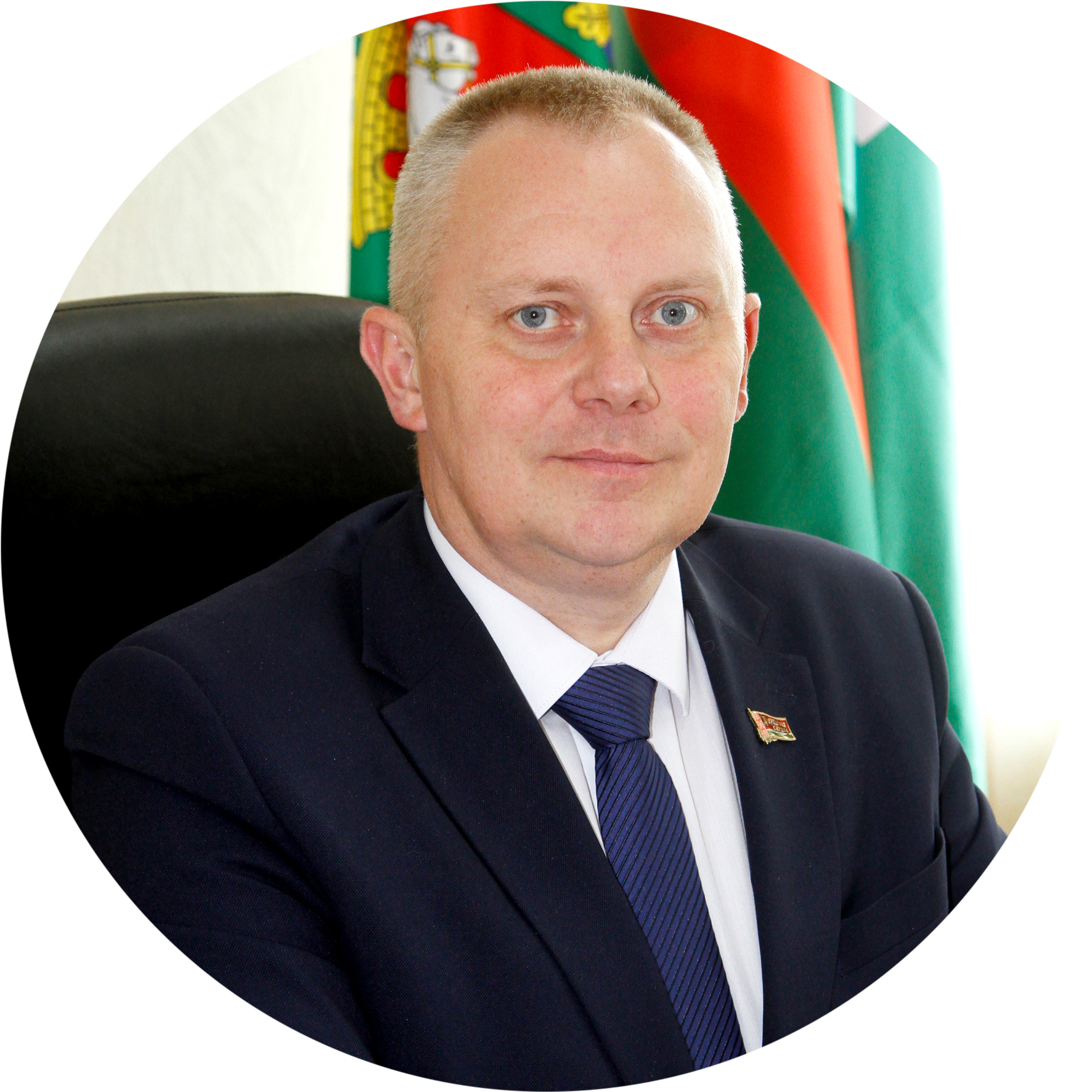
Chairman of the Sharkovshchina District Executive Committee
- 211921, Sharkovshchina, st. Komsomolskaya, 15
- 8 (021) 546-13-48
- rik@sharkovshchina.vitebsk-region.gov.by
- пн
- вт
- ср
- чт
- пт
- сб
- вс
Acceptance of applications from citizens and legal entities from 8.00


Executive Committee
Sharkovshchina Regional
Executive Committee
8 August 2025
Lukashenko's TIME interview highlights: U.S. talks, Putin-Trump meeting, Ukraine, successor
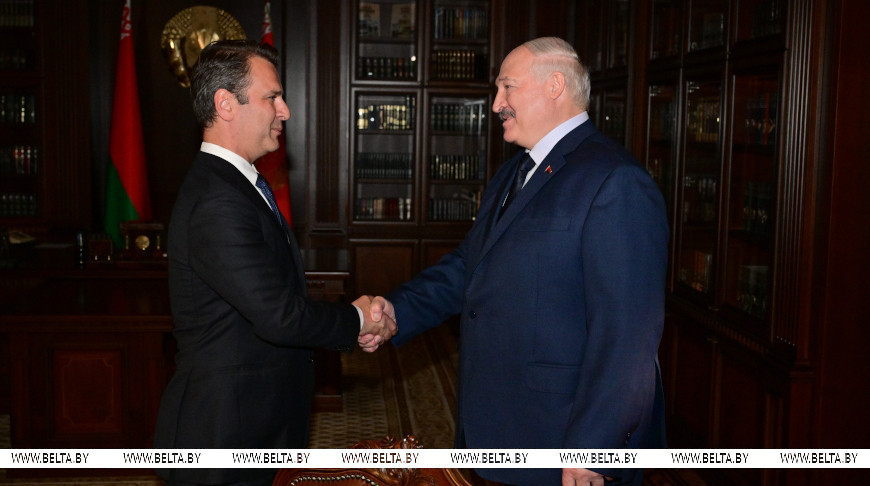
Belarusian President Aleksandr Lukashenko gave an interview to TIME Magazine. The publication’s correspondent, Simon Shuster, met with the Belarusian leader on 25 July, but until now, the name of the media outlet and the interviewer had not been disclosed. Neither the media outlet nor the interviewer's identity had been disclosed until now, per the magazine's request to maintain intrigue and exclusivity. That was the magazine's own request: to maintain intrigue and the exclusivity of the material. And now, two weeks later, it’s even more interesting to analyze this conversation in light of recent events. A few days after the interview, Aleksandr Lukashenko held informal talks with his Russian counterpart on Valaam. And just recently, Vladimir Putin met with an U.S. delegation. Will these events and their repercussions fit together like pieces of a puzzle?
But let's get back to the interview. Aleksandr Lukashenko spoke with the journalist for about three hours, including off-the-record. The interview covered a wide range of controversial topics, resulting in a candid and substantive discussion. Here are the key takeaways.
TIME journalist’s journey to Belarus; reasons for the interview
At the very beginning of the interview, journalist Simon Shuster recounted his journey to Minsk and said why he requested the meeting at this particular time. “I truly appreciate this opportunity to speak with you, especially at such an interesting time in U.S.-Belarus relations,” the journalist said at the start refereeing to the recent visits by U.S. diplomats that attracted significant attention.
“This uptick, if I may call it that, in dialogue between the Trump administration and the Belarusian government,” he noted.
According to him, the editorial team deemed this an especially opportune moment to arrange travel to Belarus and interview its president while also using their correspondent to gain firsthand understanding of the situation on the ground.
Simon Shuster emphasized how much he appreciated Aleksandr Lukashenko's conversational style - completely open and frank. “I truly value your willingness to address any question. Not every leader I've interviewed maintains this approach,” he noted.
Aleksandr Lukashenko responded that otherwise (without anticipating a frank and detailed discussion) there would have been no point in undertaking such a long journey to conduct the interview in the first place. “Otherwise why would you need to fly all this way from New York? And what’s more - kudos to you for coming to us like an ordinary person, enduring all those border difficulties and hardships.”
“Yes, it was quite an experience. Five hours on the border," the journalist remarked, clarifying that Belarusian border guards weren't responsible for the delay.
This led to discussion of recent reinstatement of border controls between certain EU countries within the Schengen zone. Official reasons are combating illegal migration, but as the president noted “one can always find justification if needed.”
On the talks with official representatives of the United States
Speaking about Belarus-U.S. relations, the head of state noted that bilateral ties had initially been good – even recalling a time when he played hockey on the same team as the U.S. ambassador. But later, especially during Russia’s special military operation, relations deteriorated significantly.
That said, ‘backchannel communications’ have been maintained. They operate mostly through intelligence services because they are beneath the threshold of public awareness. “That’s why I personally oversaw this process. Contacts were maintained through intelligence channels and I could bring in the Foreign Ministry if necessary, or government officials for specific matters, like sanctions. When discussing next steps or conceptual frameworks – particularly when formalizing a draft document – I engage the Foreign Ministry. However, primary communication still flows through intelligence channels. On your side, Christopher Smith was involved [Deputy Assistant Secretary at the U.S. Department of State]. “
“A decent man – I always jokingly call him a CIA guy when he comes. We’ve met about five times already,” the head of state said.
According to the president, this person from the American side played a pivotal role in organizing visits of U.S. officials to Belarus – including the June visit of President Trump’s special envoy for Ukraine Keith Kellogg who met with Aleksandr Lukashenko. “This is already the fifth U.S. delegation. By the way, they initiated it. And credit where credit is due – Chris Smith played and still plays the key role here,” Aleksandr Lukashenko said.
Naturally, President Donald Trump is aware of these developments, though Aleksandr Lukashenko doubts he’s deeply immersed in this matter.
The president noted that the U.S. side initiated the talks in Minsk and approached Belarusian diplomats based in New York with this proposal. “We receive signals from the Americans: they’d like to talk, discuss some regional and global issues. They’d like to talk about it. Well, we’re open to that,” Aleksandr Lukashenko said. He noted that while the Belarusian side was interested in such dialogue, it did not insist on making it public.
“What is America? Well, I don’t need to tell you what America is. It’s the world’s leader. Yes, it is weakened. Yes, sometimes you do strange things there for unclear reasons – the president says one thing in the morning, another in the evening and acts differently. We’ve seen it all there. But America remains America, and our relations are far from perfect. And the sanctions. What positive outcomes have they achieved? We are dependent on America – and not just us, but many other countries in today’s world, though the situation is changing. If they propose a dialogue, it’s good,” the president said.
Aleksandr Lukashenko stressed that the status of the U.S. negotiators was not a critical factor for him. “That’s my credo, my principle. You need to talk to everyone if you want normal relations. And if you don’t talk, you’re slowly moving toward war. We don’t need that. So there was this proposal, they came and maintained impeccable decorum throughout,” he explained.
The head of state emphasized that when Belarus began intensifying dialogue with the United States, it did not set out to achieve specific results, including getting the sanctions lifted, and generally does not have much faith in the United States’ serious commitment to normalizing relations. For example, Belarus still does not have a U.S. ambassador. However, naturally, if the sanctions were to be lifted, the Belarusian side would consider it a major step toward normalizing relations.
On the prospects of meeting with Trump
The head of state was asked whether his meeting with the American leader can be arranged as a result of the dialogue with representatives of the United States of America, who had visited Minsk recently.
Aleksandr Lukashenko said that the meeting is not on the agenda although it could be extremely useful for Donald Trump. “It would be extremely useful for him if his statements about the domestic and foreign policies are sincere,” the Belarus president noted. “Because unlike all of you, who runs around him, I could open his eyes on many things. Including the American-Russian relations. Particularly with regard to the conflict in Ukraine. Well, naturally, on Belarus’ stance.”
The head of state added that on the whole, his attitude to Donald Trump is positive and he publicly spoke in his support when President Biden was in power in the USA and an entire campaign was launched against Trump. “I openly criticized your so-called democracy, your President Biden, and I supported Trump. What you did to Trump prior to the latest presidential election was a massive disgrace,” he pointed out.
At the same time the Belarus president was critical about Donald Trump’s public actions and statements. They are often contradictory and unsubstantiated and therefore are not accepted seriously and do not invoke trust. His multiple statements about the USA’s intention to introduce duties against other countries are the latest example. “I guess your entire policy is focused on the duties. And one kind of duties in the morning, another kind in the evening. But before talking about duties only to later cancel them or disavow your statements, you have to consider all the factors. It is not that complicated,” Aleksandr Lukashenko believes.
In his opinion, the state of affairs stems from the character of the American leader, due to which the people around him do not dare speak sincerely or critically about various decisions and statements by Donald Trump. In particular, this matter was raised when USA representatives visited Minsk and met with the Belarus president.
Aleksandr Lukashenko mentioned one episode: “We discussed and talked about things for a long time. Then I said as a joke that the United States of America could do with a dictator. They said they have plenty of their own. I disagreed. I said I meant me. I said I could tell their president a lot.”
On close relations with Russia and loudmouths in the EU
In one of the questions, the journalist voiced the existing opinion that the U.S., by restoring dialogue with Belarus, is seeking to somehow drive a wedge between it and Russia. “Well, that’s someone’s dream,” the president remarked.
The U.S. has always had such intentions. George Soros even spoke about this back in the 1990s when he visited Belarus and met with Aleksandr Lukashenko. “I said: ‘George, I am sorry, but I will not conduct this policy in an American way, I will not do this. Therefore, this is probably our last meeting.’ I made it clear that we would not cooperate. And since then I have adhered to this policy,” the president said.
Aleksandr Lukashenko pointed out that Belarus and Russia maintain close allied relations, which have developed not only historically but are also codified in numerous agreements. Belarus strictly adheres to all its obligations. “This is why some Western Europeans and the rest, even Americans should stay out of our relations with Russia. We have relations in the military field. You know. Starting with Oreshnik missile systems and ending with nuclear weapons. Our relations are of military technology nature, of economic nature. It is our market. The Russian market is the largest market for Belarus. We buy energy resources from them. Only from Russia. And so on. Can anyone replace it for us? No. Even from the practical point of view. No one can. Let alone our legal agreements,” the head of state said.