Chairman of the Sharkovshchina District Executive Committee
- 211921, Sharkovshchina, st. Komsomolskaya, 15
- 8 (021) 546-13-48
- rik@sharkovshchina.vitebsk-region.gov.by
- пн
- вт
- ср
- чт
- пт
- сб
- вс
Acceptance of applications from citizens and legal entities from 8.00


Executive Committee
Sharkovshchina Regional
Executive Committee
10 July 2025
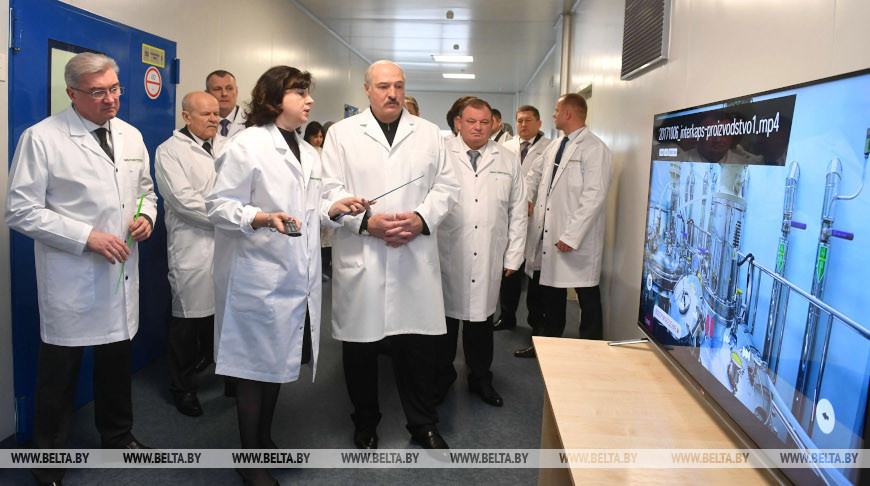
Self-sufficiency at the heart of Belarus’ strategy for pharmaceutical industry
The life and health of people are at the forefront of Belarus’ national security. The pharmaceutical and microbiological industry plays a special role here.
Over the years of independence, Belarus has come a long way: from a modest line-up to modern multidisciplinary production of complex medical drugs. In this episode of BelTA’s YouTube channel “After the Fact: Lukashenko’s Decisions” we will explain why Aleksandr Lukashenko insisted on the replacement of imported medicines and whether the government has been successful in implementing this strategy, why Belarus needed a vaccine center and what kind of trap we all fell into when, according to the president, “we have become more and more distanced from nature and its life-giving benefits.” What did the head of state warn private pharmacies about? What medicine does the Belarusian leader consider the most effective and the cheapest? A small spoiler: everyone has it at hand.
What medicines are produced in Belarus
Biotechnologies and pharmaceuticals have long been among the priorities for the Belarusian state. Just one fact: in monetary terms, more than half of the drugs in the country are domestically produced. Yet, the share of Belarusian drugs in pharmacies (in standard packages) is about 65%. Their share is rising.
Belarus offers a number of unique drugs for the treatment of cancer, immune and cardiovascular diseases, antiviral and antibacterial drugs, as well as tools for the treatment of diseases of the musculoskeletal system, digestive tract, metabolism and others. But, of course, that wasn't always the case.
The history of the pharmaceutical industry in Belarus began 100 years ago. The country’s first chemical and pharmaceutical plant named after the First Five-Year Plan (the present Belmedpreparaty company) was launched in the 1920s. Originally it produced essentials: powders, ointments, mixtures. Over time, the product line-up expanded and the plant even began to export its goods to the countries friendly to the USSR in Europe, Asia and Cuba.